Bollywood Music Tambola Game: Housie With Hindi Songs Instead of Numbers
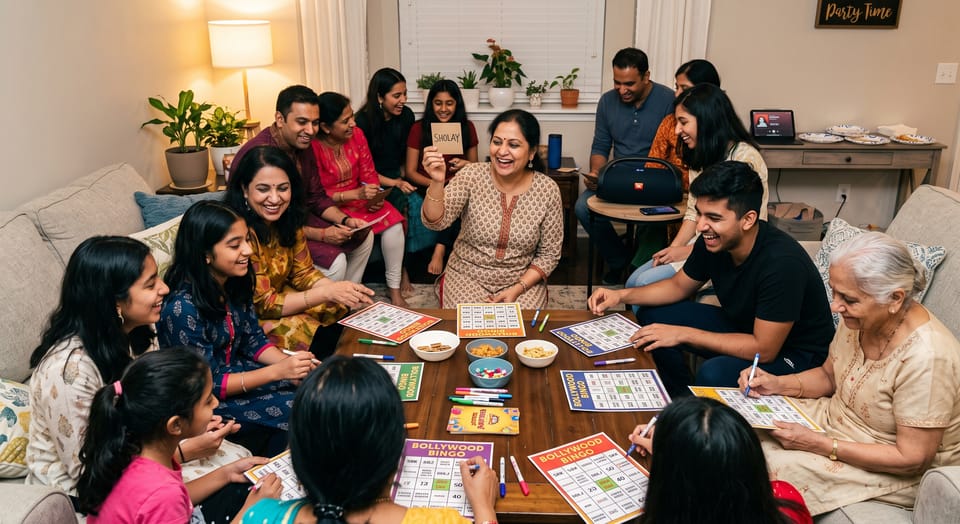
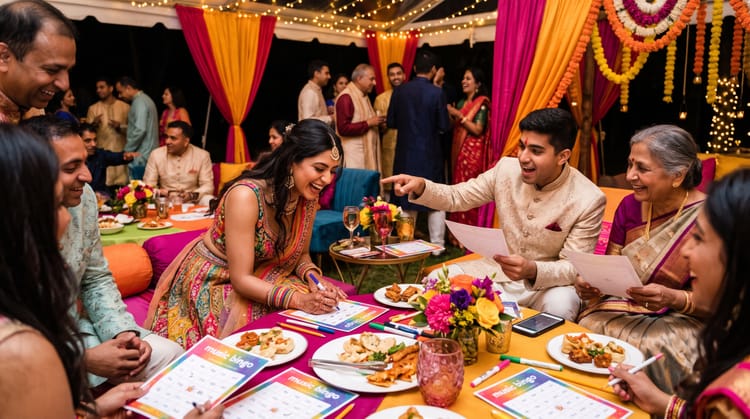
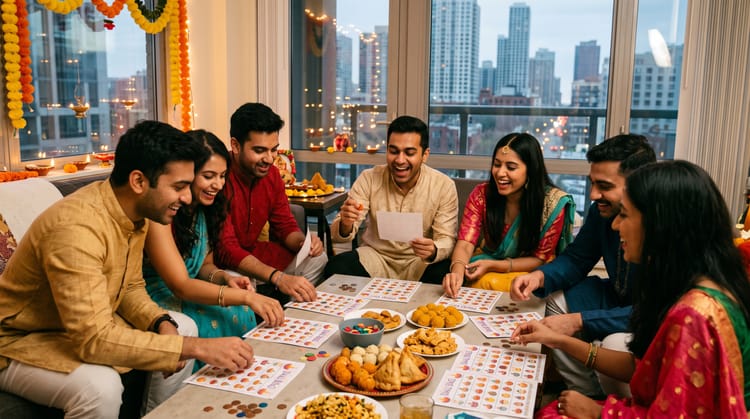
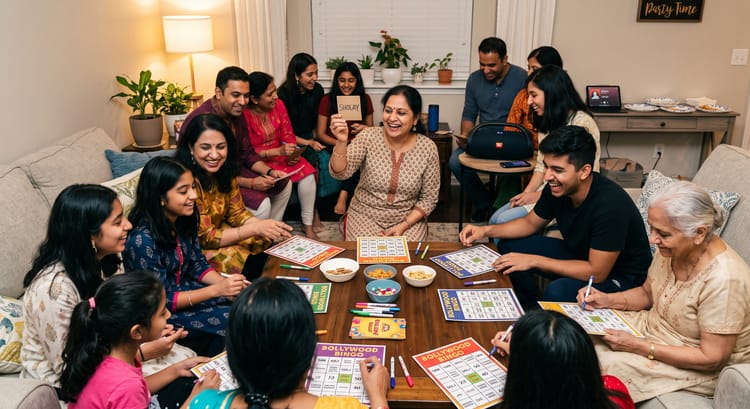
Every desi function hits a flat patch where the playlist is on, the food is done, and nobody is doing anything with either. Bollywood music tambola fixes that stretch. It is housie played with Hindi film songs instead of numbers: the caller plays a few seconds of a track, you find the title on your ticket, and the first full line wins.
Tambola needs tickets and a song list, so it rewards a few minutes of setup. If you want something running this second with nothing printed, a quick round of charades needs only the people already in the room. For tambola itself, you can build the tickets yourself or start from a ready-made set, and the rest of this explains both.
What is Bollywood music tambola?
Bollywood music tambola is standard housie with song titles in the squares instead of numbered tokens. Tambola, housie and bingo are three names for the same game, so if you have ever marked a ticket at a kitty party, you already know how this one runs. The only new rule is that a song stands in for a number.
Recognition is all it asks. A quiz wants to know who sang it and in which film. Tambola asks only whether the song is on your ticket, so the cousin who knows nothing about music wins about as often as the one who knows everything.
How is it different from the number version?
The ticket and the caller change, and nothing else does. Each player holds a grid of song titles rather than a numbered ticket, and the caller plays twenty or thirty seconds of a track rather than reading out a number. You mark the title when you hear it, and you call the same shapes: a line, four corners, or a full house.
The practical effect is that the room goes quiet and listens, which a numbered game never manages. People talk straight through numbers. They stop the second a song they half-remember starts playing.
How do you set up a music tambola game?
Set it up in five steps: pick a song pool, print one unique ticket per player, play short clips, track what you have played, and settle the winning pattern before you start.
- Build a pool of forty to sixty songs. Fewer and the tickets repeat each other; more and the round drags before anyone is close.
- Give every player a different selection. Identical tickets mean everyone wins at the same moment.
- Play twenty to thirty seconds per track, starting from the chorus. A lot of film songs open with a long stretch of strings before anything recognizable.
- Write down each song as you play it. When a line is called you have to check it, and nobody remembers track eleven.
- Name the winning pattern out loud before the first song. A line, then four corners, then a full house keeps one pool useful for an hour.
That is the short version. The full bingo walkthrough covers ticket printing and clip length in more detail, because music tambola and music bingo are the same game under two names.
Which songs belong on a music tambola ticket?
The best songs are the ones a mixed-age room places in four seconds, spread across enough decades that nobody stares at a ticket full of songs they have never heard. A starter pool:
- Chaiyya Chaiyya, from Dil Se.. (1998)
- Tujhe Dekha To, from Dilwale Dulhania Le Jayenge (1995)
- Kajra Re, from Bunty Aur Babli (2005)
- Dard-E-Disco, from Om Shanti Om (2007)
- Balam Pichkari, from Yeh Jawaani Hai Deewani (2013)
- Nagada Sang Dhol, from Goliyon Ki Raasleela Ram-Leela (2013)
- Apna Time Aayega, from Gully Boy (2019)
- Jhoome Jo Pathaan, from Pathaan (2023)
Build out to fifty from there, and lean toward whatever the particular room grew up on. A ticket that ignores half the ages in the room produces half a game. Song titles are all you ever print, because the game never needs a line of the actual lyrics.
Does it work at a sangeet or kitty party?
Yes, and it fits those two better than almost anywhere, because tambola is already the game being played there. A kitty party runs on housie. A sangeet already has the songs. Swapping the numbered tickets for song tickets changes nothing the hosts have to learn and gives the afternoon a spine.
For a sangeet, build the pool from wedding-floor staples and the couple's own favorites. For a kitty party the usual mix of decades works, because the group tends to be one generation and the songs can sit squarely in it.
Where do you get music tambola tickets?
You either make them or buy them, and both produce the same game. Making them means a spreadsheet, a random sort and a printer, about fifteen minutes for ten tickets.
If the party is tonight and the reshuffling is the part you would rather skip, the Bollywood Music Bingo pack comes with two hundred ready-made tickets and a matched song list, and prints on a home printer. It is the same music tambola game, sold under the bingo name.
Frequently asked questions
Is tambola the same as bingo?
Yes. Tambola, housie and bingo are three names for one game: a grid of items, a caller, and a race to complete a line. Tambola and housie are the names used across India and most desi households, bingo is the name used in the West, and music tambola is any of them with song titles in place of numbers.
What makes it a music game rather than a normal housie?
The caller plays a song instead of calling a number, and the ticket holds song titles instead of a numbered grid. Everything else, the patterns, the tickets, the race to a line, is ordinary housie. That one swap turns a game people half-ignore into one the whole room watches, because a song pulls attention in a way a number never does.
How many songs do you need for a music tambola game?
Forty to sixty for a group of up to twenty-five players. Below forty, the tickets overlap so heavily that several people finish at once and the round ends in an argument. Above sixty, most of the pool never gets played and the songs people waited for never arrive. Build to fifty and keep ten in reserve for a round that runs long.
Can kids play music tambola?
Yes, and they tend to do well, because the game rewards recognition rather than knowledge. Build the pool from the last ten or fifteen years and children from about seven upward keep pace with everyone. Reading the titles is the only real limit, so for younger players use fewer squares and shorter titles.
Do you have to print tickets, or can you use the number ones?
You need song tickets, not numbered ones, because players mark the title they hear rather than a number. You can make them in a spreadsheet in a few minutes, or print a ready-made set. A numbered housie ticket will not work, since there is nothing on it to match a song to.
Start a round
For a game that needs nothing but the people already in the room, open the charades generator and go. For music tambola, make your tickets in a spreadsheet, or start from a ready-made set and keep the afternoon for the party.
You might also like
- Bollywood Bingo: how to play and 32 songs for the card
- 40 Hindi films that actually work for dumb charades
- Indian wedding games beyond antakshari
Written by Tapan Desai. Last updated 30 October 2026.